Table of Contents
Understanding SEO: The Basics You Should Know
What Does SEO Stand For and Why It Matters
SEO stands for Search Engine Optimization. It's the practice of optimizing your website to rank higher in search engine results pages (SERPs) for relevant keywords. SEO matters because higher rankings mean more visibility, traffic, and potential customers.
How Search Engines Rank Websites
Search engines like Google use complex algorithms to determine which websites deserve to rank highest for any given query. Key factors include content quality, relevance, backlinks, user experience, and technical optimization.
Key Elements of SEO: On-Page, Off-Page & Technical
- 🔍 On-Page SEO: Content optimization, keywords, meta tags, header structure
- 🔗 Off-Page SEO: Backlinks, brand mentions, social signals
- ⚙️ Technical SEO: Site speed, mobile optimization, crawlability, schema markup
What Is Local SEO?
Local SEO is a specialized branch of SEO that focuses on optimizing your online presence to attract customers from relevant local searches. When someone searches for "dentist near me" or "coffee shop in Lahore," local SEO determines which businesses appear.
🎯 Key Takeaway
Local SEO is essential for any business with a physical location or serving a specific geographic area. It helps you appear in Google Maps and the "Local Pack" — the top 3 local results.
The Main Goal of Local SEO
The primary goal of local SEO is to help businesses with physical locations or service areas rank higher in location-based searches, driving foot traffic and local leads.
How Google Local Algorithms Work
Google's local algorithm considers three main factors:
- 📍 Relevance: How well your business matches the search query
- 📏 Distance: How close your business is to the searcher
- ⭐ Prominence: How well-known your business is online
A fully optimized Google Business Profile significantly increases your chances of appearing in the Local Pack. Make sure to add photos, respond to reviews, and keep your information updated!
The Core Differences Between SEO and Local SEO
Target Audience and Geographic Focus
Keyword Strategy and Search Intent
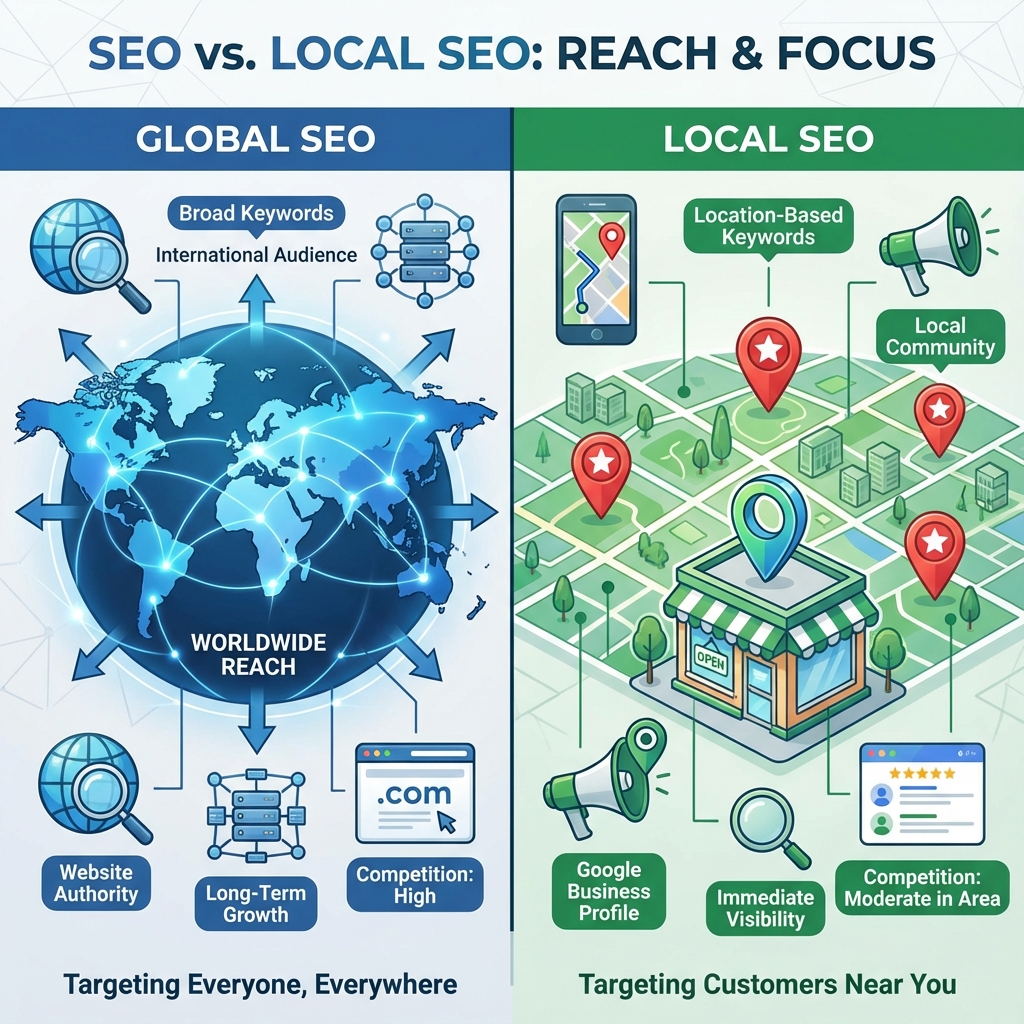
Traditional SEO targets broad keywords with high search volume. Local SEO focuses on location-specific keywords and "near me" searches that indicate immediate purchase intent.
"76% of people who search for something nearby visit a business within 24 hours, and 28% of those searches result in a purchase."
Ranking Factors That Set Them Apart
- Traditional SEO: Backlinks, content quality, domain authority, technical optimization
- Local SEO: Google Business Profile, local citations, reviews, NAP consistency, proximity
When Should You Focus on Local SEO Over General SEO?
Businesses That Benefit Most From Local SEO
Retail Stores
Restaurants
Medical Practices
Service Businesses
Don't ignore local SEO if you have a physical location! Even businesses that primarily operate online can benefit from local search visibility.
Step-by-Step: How to Start with SEO and Local SEO
Setting Up a Strong SEO Foundation
- ✅ Conduct keyword research
- ✅ Optimize on-page elements (titles, meta descriptions, headers)
- ✅ Create high-quality, relevant content
- ✅ Build quality backlinks
- ✅ Ensure technical optimization
Optimizing Your Local Presence
- 📍 Claim and optimize Google Business Profile
- 📍 Build consistent local citations
- 📍 Encourage and manage reviews
- 📍 Create location-specific content
- 📍 Build local backlinks
Common Mistakes People Make with SEO and Local SEO
- ❌ Ignoring local citations and reviews
- ❌ Overlooking mobile optimization
- ❌ Inconsistent NAP information
- ❌ Focusing only on one type of SEO
- ❌ Neglecting content quality
Measuring SEO vs. Local SEO Success
Key Performance Indicators (KPIs) to Track
- 📈 Traditional SEO: Organic traffic, keyword rankings, backlinks, domain authority
- 📍 Local SEO: Local pack rankings, GMB views, calls, direction requests, reviews
FAQs
Is local SEO part of SEO?
Yes, local SEO is a specialized subset of SEO focused on location-based searches.
Do online-only businesses need local SEO?
Generally no, but if you have a physical office or serve specific regions, local SEO can still help.
Can I do both SEO and local SEO at the same time?
Absolutely! In fact, combining both strategies often yields the best results.
Final Thoughts: Which One Should You Focus On?
The answer depends on your business model. If you serve customers in specific geographic areas, prioritize local SEO. If you sell products or services nationally or globally, focus on traditional SEO. Most businesses benefit from a combination of both.
Need Help Choosing the Right SEO Strategy?
Let me help you determine the best approach for your business.
Get Started Today